

Merchants spend significant time and resources reducing friction in the checkout experience. Fewer fields, faster flows, and streamlined design are often treated as the primary path to higher conversion.
But what if some of the behaviors labeled as friction are not problems to solve but signals of something deeper?
Our research shows that many common consumer behaviors that slow down checkout are deliberate decisions they make to protect themselves.
Not all friction is created equal
Consumers frequently choose to:
- Use guest checkout instead of creating an account
- Manually enter card details instead of saving them
- Avoid autofill or stored credentials on unfamiliar sites
From a merchant perspective, these actions look like inefficiencies since they reduce opportunities to capture customer data. But from a consumer perspective, they are safeguards.
Many consumers associate stored credentials with risk, especially when interacting with a new or unfamiliar merchant. Entering payment information each time may take longer, but it provides reassurance and a sense of control.
The cost of misdiagnosing behavior
When these behaviors are treated purely as friction, merchants may optimize in the wrong direction.
Efforts to eliminate steps or encourage credential storage too aggressively can create unintended consequences. If consumers feel rushed or uncertain, trust declines, and when trust declines, so does conversion.
This creates a paradox as reducing friction does not always increase conversion. In some cases, it does the opposite.
A more effective approach
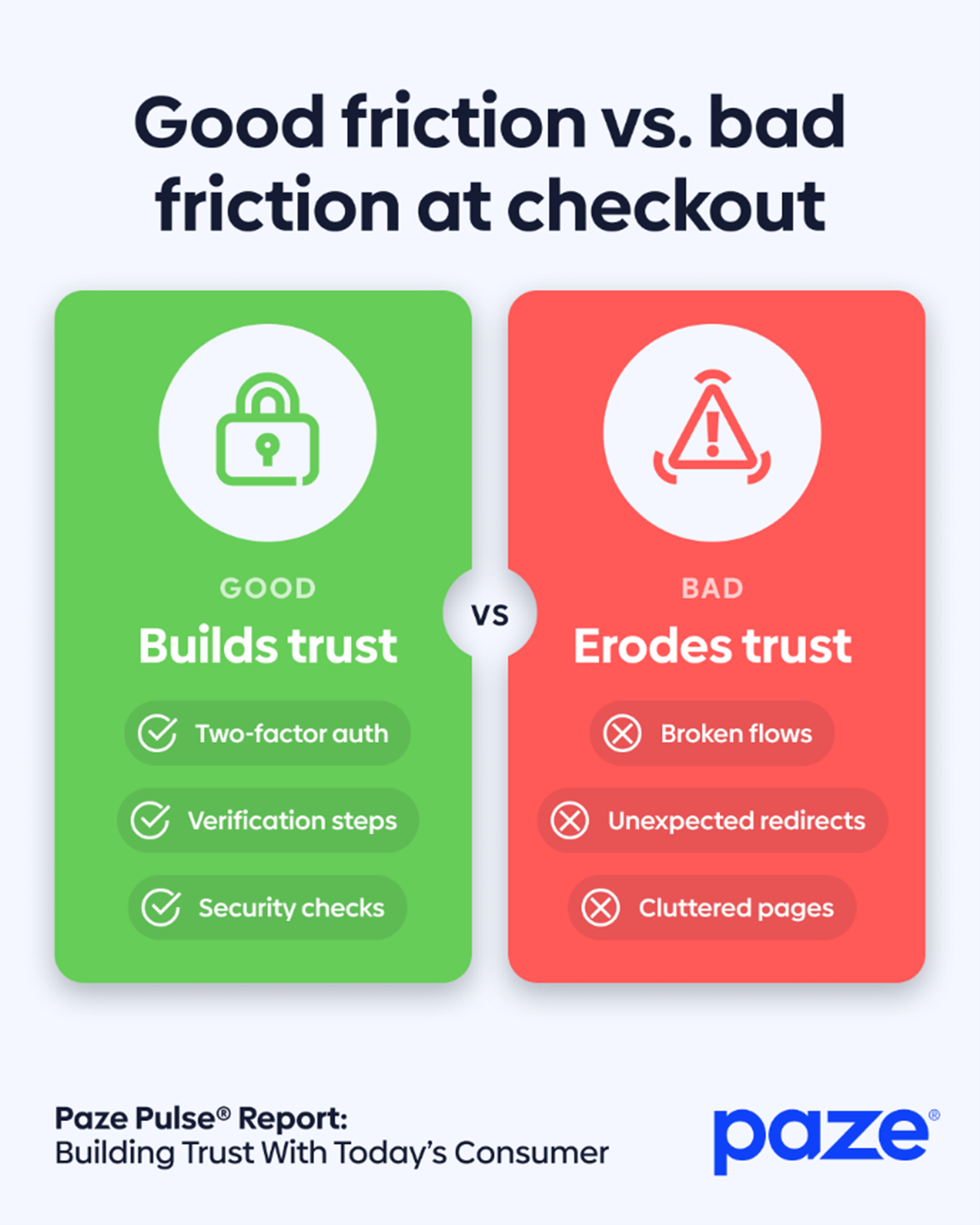
The goal is not to remove all friction but to understand which types of friction support trust and which undermine it. Friction that signals security, transparency, or control can reinforce confidence. Friction that feels unnecessary or confusing can erode it.
Merchants that make this distinction are better positioned to align their checkout experience with how consumers make decisions.
Why this matters
Conversion is not only a function of speed. It’s also a function of trust. When merchants recognize that some behaviors are intentional, they can design experiences that respect those choices rather than push back against them.
Want to understand how trust shapes conversion across the full journey?
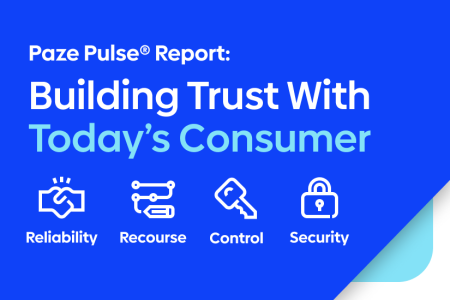
Download the full Paze Pulse® report for deeper insights and practical implications.





 at checkout?